Why Cross-Team Dependencies Decide Whether a Software Project Succeeds
By Caleb Odom7 min read
Who else has to make a decision before your software project can work? It’s a question to settle before comparing feature lists. You can have funding, a capable development team and an enthusiastic sponsor, yet still be waiting on a business decision nobody has agreed to make.
Start with the unanswered questions that could change what you buy. Then work out who can answer them. You don’t need every detail settled before development begins, but you do need to know whether the approach you’re considering is allowed, supported and worth pursuing. Otherwise, you’re buying work around assumptions that another department could overturn.
The person asking for the software won’t have every answer
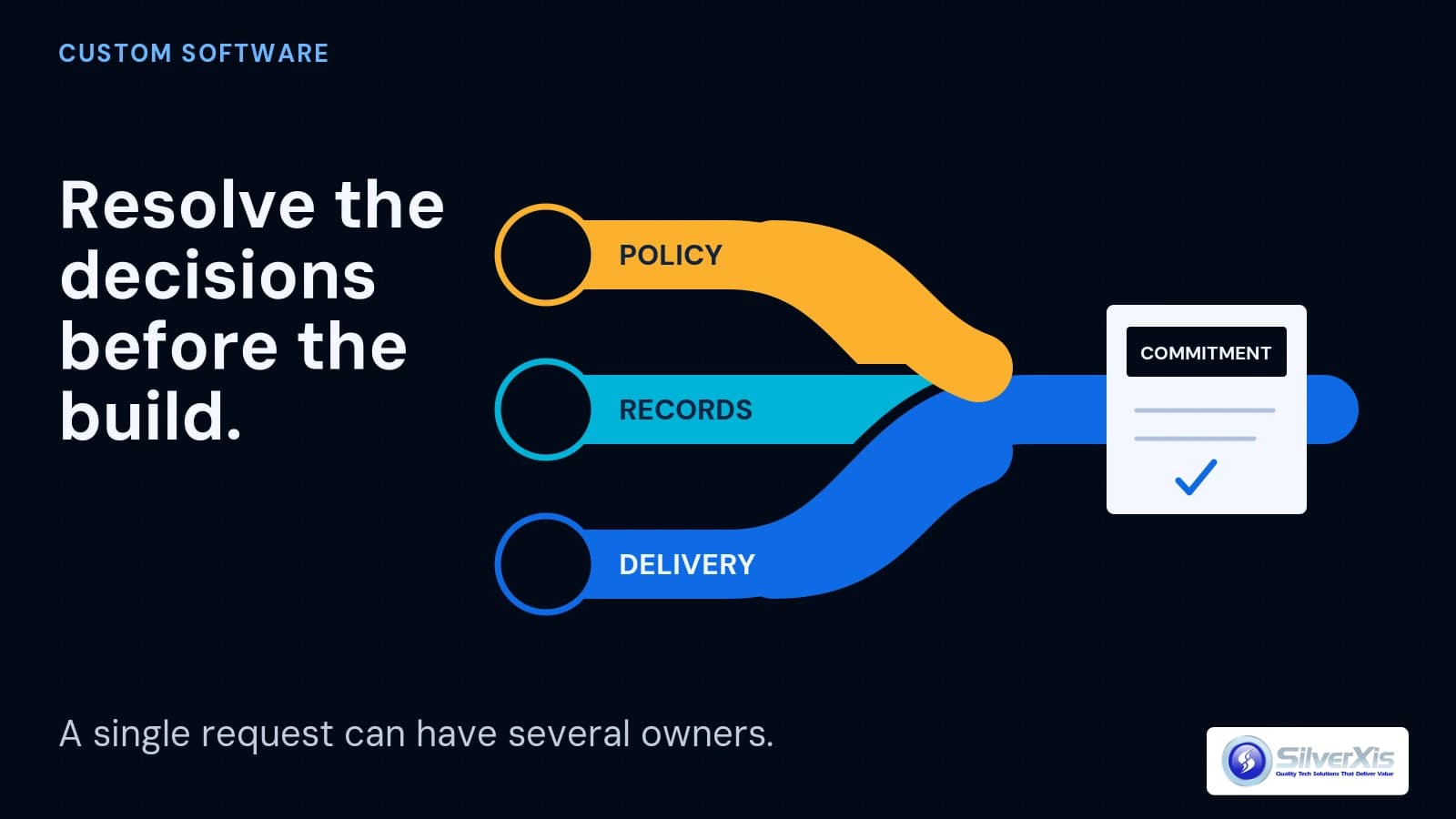
The person living with the problem belongs in the buying conversation. But that doesn’t mean they control all the records, policies or resources needed to solve it. You need the people who can make those decisions, not a bigger audience for the same demonstration.
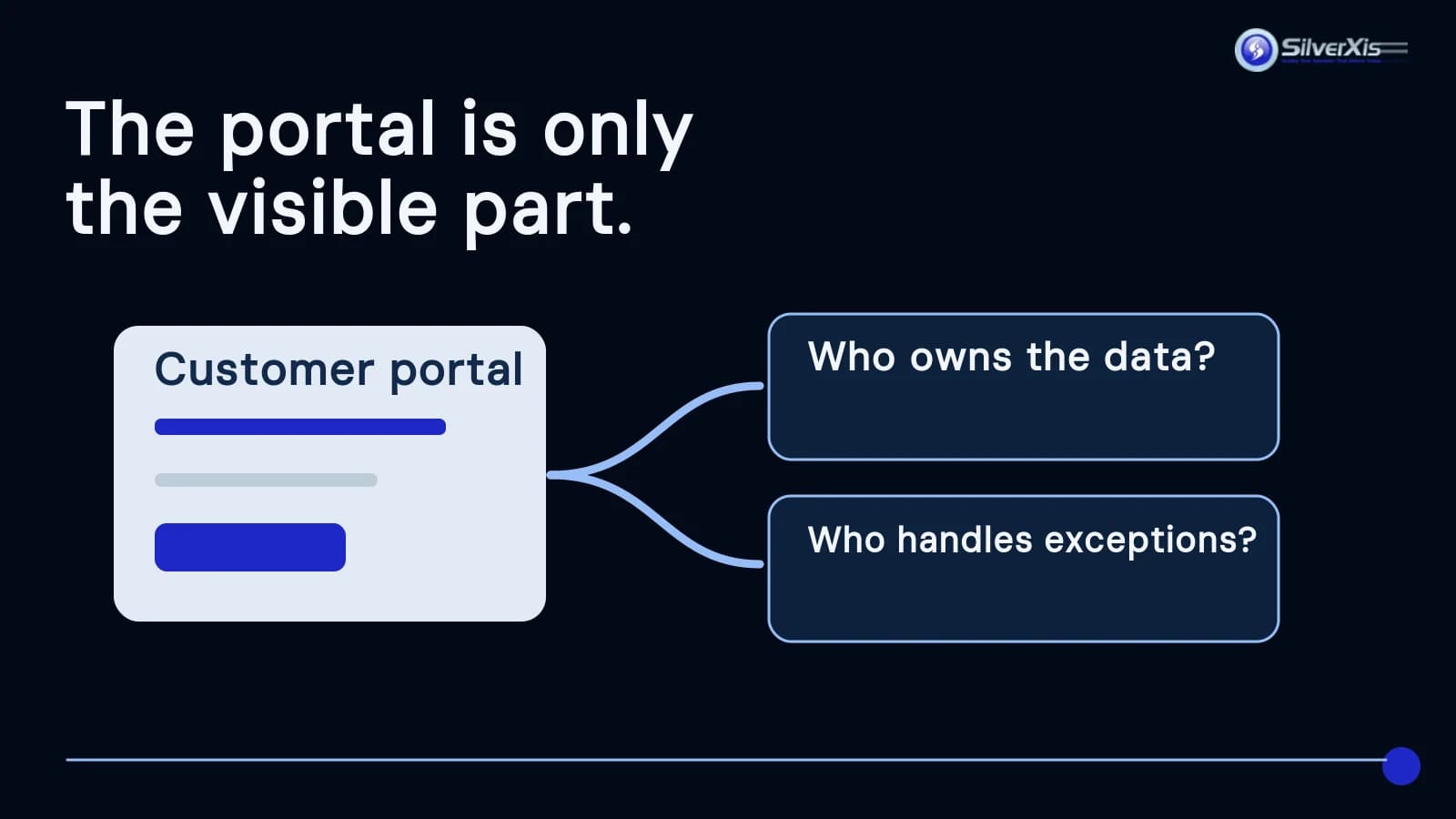
Take customer self-service. The screens are only part of the decision. Someone has to decide which records customers can see, which changes they can make and when a person still needs to step in. Those answers define what the service should do. Developers shouldn’t have to guess from the existing website.
Keep the group small by giving everyone a question to resolve. The record owner confirms what information is available. The process owner decides which exceptions need human judgment. The sponsor settles competing priorities. When each person knows why they’re there, the conversation can move toward a decision rather than another meeting.
Who could change the answer?
Which person could rule out the proposed approach but isn’t in the conversation yet? Include them before you compare final proposals.
Some unanswered questions matter more than others
You don’t have to stop a purchase for every unresolved detail. The wording of a confirmation message can wait. Whether the existing platform supports the customer permissions you need is a different matter. One changes a small part of the experience. The other could change the solution.
The same goes for who will maintain the records after launch. That’s a business responsibility the software will depend on. A navigation label is a design choice the team can work through. Treating both as equally urgent makes it harder to see what really needs an answer before you commit.
Write down the questions that could make you choose a different scope, engagement or investment. Give each one an owner and a date. Let the smaller details develop as the work progresses. That’s how you make room to learn without treating every assumption as safe to carry into a contract.
Buy the answer you need before buying the whole build
Sometimes the next purchase should be a limited discovery effort, not the full development project. If one unresolved question could change the approach, paying to answer it first can make more sense than collecting proposals built on different guesses.
Be specific about what that work needs to establish. You aren’t buying documentation for its own sake. You need evidence that lets the team proceed, change direction or stop. Confirming access to records, agreeing who owns them or checking a platform’s capabilities can give you the answer needed for the larger commitment.
Could an answer change what you buy?
What would make you configure an existing platform instead of building custom software? Settle that question before approving a full build.
DECISION GUIDE
Resolve the purchase-changing unknown.
01
Changes the purchase
Resolve before committing
02
Implementation detail
Decide during delivery
03
Decision owner missing
Assign ownership first
Sort open questions by when they need an answer
Support for a project isn’t the same as time to work on it
A department can be fully behind your project and still have no room to review it. Before you commit to a schedule, ask the people who own the decisions when they can actually make them. A promise to help isn’t the same as time reserved to do the work.
Also agree on what happens when those people aren’t available. You might narrow the first release, change the order of work or move the commitment. None of those choices removes the original goal. They recognize the conditions needed to reach it instead of relying on an optimistic date.
At SilverXis, we start with the business problem. If an existing platform genuinely covers the need, that’s the option to examine. Custom development makes sense when the way the business needs to work can’t be met by that platform. Decisions across the buying team help establish which situation you’re in.
Check what everyone thinks they’re approving
Before signing, ask the sponsor, process owner and record owner to describe the first release in their own words. You may hear differences that a feature list didn’t reveal. Resolve the ones that affect the purchase and record what your own organization will still need to provide.
Does everyone mean the same thing?
What will customers be able to do after the first release? Ask each decision maker separately and compare their answers.
A good buying decision doesn’t require certainty about everything. It requires agreement about what must be true for the investment to work, who will establish it and what you’ll do if the answer changes. That’s a reason to involve other departments, not a reason to turn the purchase into a committee exercise.
Use SilverXis’s Build Plan (Map My Solution) to work through the decisions behind a proposed build. Choose Map My Solution and describe the unanswered question that could change your approach.
About the Author
Caleb Odom Director of Partnerships (SilverXis)
Caleb Odom is Director of Partnerships at SilverXis. His business-development work spans custom software, IT staff augmentation and digital marketing. He helps organizations examine their needs, understand dependencies and evaluate potential approaches. His perspective centers on how stakeholders make buying decisions and connect a service investment to a useful business outcome.
No commitment required · Response within 24 hours · Free discovery call
We use cookies to understand how our site is used. Necessary cookies keep the site working. With your permission, we’d also use analytics cookies to improve it. You can change your mind anytime in Cookie settings. Cookie Policy