Better Technical Hiring Starts With Evidence of the Work
By Steve Flad7 min read
Ask a technical candidate what they personally owned on a project, then give them time to answer. The team’s result and the person’s contribution aren’t necessarily the same thing. Understanding the difference gives you a better basis for judging fit than a list of technologies or an impressive project headline.
You don’t have to take over the technical interview to have a better recruiting conversation. You do need enough context to help the specialist ask the right follow-up questions, help the hiring manager compare experience and give the candidate an honest picture of the assignment.
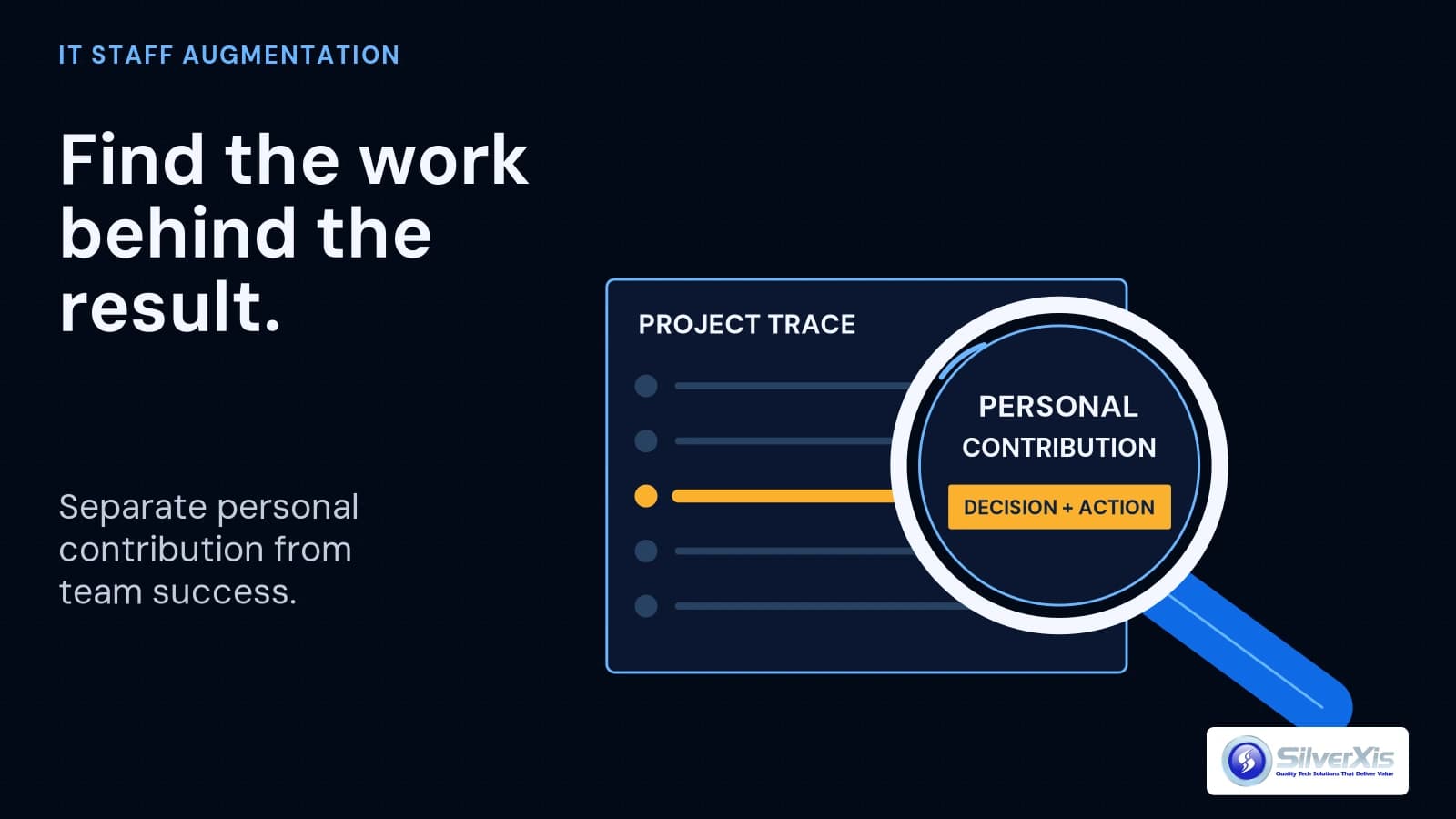
Find out which part of the work was theirs
A successful product or a familiar company name gives you somewhere to begin. It doesn’t tell you what the candidate did. Ask when they joined the project, what they were responsible for and who made the decisions around them. Then let them describe their part without assuming they owned the whole result.
Working under an experienced lead isn’t a weakness. It can be exactly the background you need for an assignment with similar support. But if your role requires someone to make those decisions independently, you’ll need to explore that difference. The question is whether the experience fits the responsibility you’re offering.
Choose one piece of work and follow it through. What did the candidate receive? What did they change? Who reviewed it? You can learn more from that conversation than from asking them to list everything their team shipped.
Listen for the move from we to I
When someone describes a team result, ask which decision or deliverable was theirs. Leave room for them to explain the contribution without claiming everyone else’s work.
Ask about a decision, not a rescue story
A project doesn’t have to go dramatically wrong to reveal how someone works. Ask about a constraint that changed the approach and what the candidate did in response. You’re listening for judgment, collaboration and responsibility, not waiting for a story about saving the day.
Keep the questions close to the assignment. For testing work, ask how they decided what to check and what happened when a check failed. For independent delivery, ask what they decided themselves and when they sought help. The technical interviewer can assess whether the technical choices were sound.
Pay attention when a candidate explains a boundary. Saying that another person approved the design, or that they escalated an issue, helps you understand how the work really happened. It gives you more to evaluate than a claim that they handled everything themselves.
Don’t ask someone to prove experience by breaking confidence
A candidate shouldn’t have to share a former employer’s code, customer records or private documents to have a credible conversation. A polished portfolio isn’t the only way to show relevant experience. Ask for enough detail to understand the work without requesting information they aren’t entitled to share.
You can discuss the project context, their responsibility and how the work was checked without naming a client or seeing a private document. If another assessment is needed, explain what you’re trying to establish. Being careful with confidential information shouldn’t count against someone.
Check what you’re asking for
Can the candidate answer without disclosing confidential information? If not, change the question rather than treating the refusal as a lack of experience.
Give candidates a fair chance to explain
Ask each person the same core questions, then follow up where their answers lead. It’s hard to compare candidates when one has a relaxed project discussion and another faces an entirely different test. Consistency gives the hiring team a better view of where the evidence is strong and what still needs checking.
Keep three things separate in your notes: the setting, the contribution and how the work was verified. The setting explains what the person had to work with. The contribution explains what was theirs. Verification tells you how the team knew the work met its purpose.
That structure shouldn’t turn the interview into a rigid script. Candidates need room to explain differences in their experience. And a smooth presentation isn’t a substitute for relevant work. Judge communication in relation to what the assignment actually requires, rather than rewarding polish for its own sake
DECISION GUIDE
Follow the evidence in sequence.
01
Context
What conditions shaped the work?
02
Contribution
What did the candidate decide or do?
03
Verification
How was the result checked?
Ask about context, contribution and verification, in that order
Use what you learned when the person starts
A shortlist should give the next interviewer more than another copy of the resume. Include the contribution that fits the assignment, the support the candidate had and any responsibility the new role would add. That helps the hiring team decide what to explore next instead of starting the conversation over.
What’s different about this assignment?
What will the candidate need to own independently that they previously did with support? Agree on how to assess and support that change.
Before the start date, connect the first task to the experience that made the person a good match. Confirm who will review the work, what access is needed and how the team will collaborate. SilverXis matches candidates to the actual brief and assesses relevant experience and fit before the client interview. Those expectations should carry through to the assignment, not change once someone accepts.
For SilverXis’s Staff Augmentation and Dedicated Teams, begin the Build My Team inquiry with the first responsibility the consultant will own. Explain the project experience your hiring team needs to see for that responsibility.
About the Author
Steve Flad Staffing and Fulfillment Manager
Steve Flad is Staffing and Fulfillment Manager at SilverXis, working with technical candidates, software consultants and hiring teams. His recruiting perspective connects project requirements with relevant experience, candidate fit and placement readiness. He focuses on the practical details that help both sides understand an assignment, including responsibilities, collaboration, expectations and onboarding.
No commitment required · Response within 24 hours · Free discovery call
We use cookies to understand how our site is used. Necessary cookies keep the site working. With your permission, we’d also use analytics cookies to improve it. You can change your mind anytime in Cookie settings. Cookie Policy