Onshore, Nearshore or Offshore: How to Choose a Technical Staffing Partner
By Steve Flad9 min read
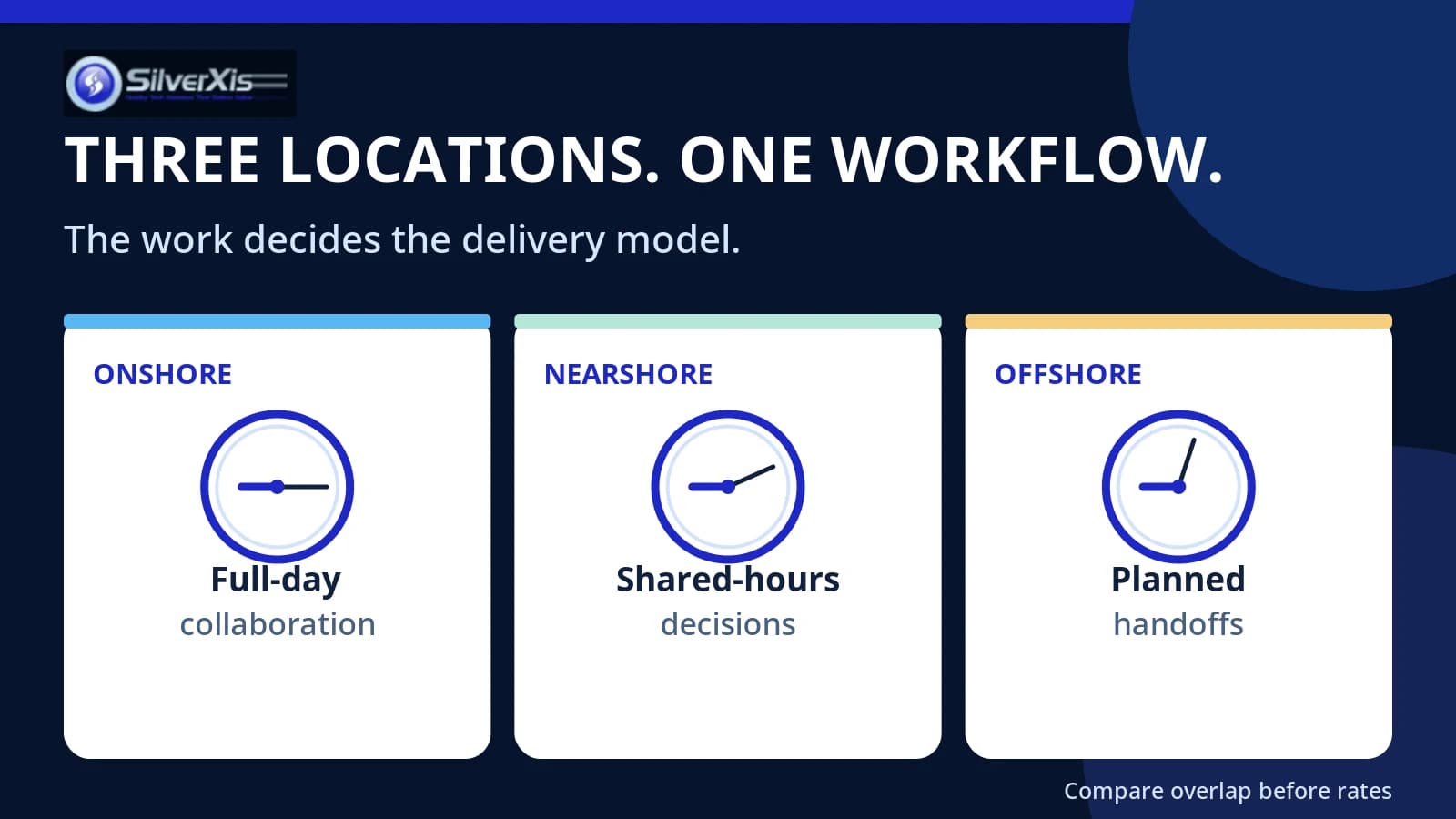
Choose a technical staffing partner by matching the delivery model to the work. Onshore talent fits work that needs full working-day overlap or regulated, client-facing duties. Nearshore fits collaborative sprint work with several hours of daily overlap. Offshore fits sustained build capacity. Compare partners on how they help you make that choice, then on rates.
Thoughtworks described how hard distributed delivery can get in a Feb. 10, 2022, account of building a data platform for a large healthcare client. More than 100 people worked in six or seven groups from three or more organizations, across four time zones that included the U.S. West Coast and India. The challenges it described centered on team structure, handoffs and dependencies between teams. Thoughtworks recommended explicit collaboration patterns and fewer unnecessary handoffs.
What is the difference between onshore, nearshore and offshore staffing?
Onshore means engineers working within U.S. time zones. That is often the simplest fit when your managers need live access throughout the workday, the work involves sensitive customer conversations or people occasionally need to be on-site. You are paying for proximity and immediate collaboration as well as technical skill. Ask exactly where a proposed person will work, since a partner’s headquarters doesn’t establish the person’s location.
Nearshore places talent in nearby time zones. You can usually protect several working hours for design discussions, sprint planning and quick decisions without asking one side to work overnight. That makes nearshore worth examining for work with changing requirements. The tradeoff is that a nearby time zone still does not guarantee availability. A shared schedule has to be part of the proposed assignment.
Offshore refers to a more distant delivery location. It can be a strong fit for sustained development work with defined priorities, a technical lead who can answer questions and a dependable written handoff. A larger time difference can also expose a weak process: an unanswered question at the end of one workday becomes tomorrow’s delay for somebody else. Plan for that before you compare hourly rates.
The overlap question: How many hours a day does this assignment need someone available live with your team?
Start with the work, not the hourly rate
The right question is how much simultaneous work the assignment demands. A product owner who changes priorities during the day needs a different arrangement from a team completing a stable backlog. If the work requires daily pairing with U.S. engineers, write down the hours when both sides must be available. If a new task can be assigned overnight and reviewed in the morning, the overlap requirement may be smaller.
Oversight matters just as much. Who is available when a design choice blocks the next step? Who decides whether a change affects security or an existing system? The person directing the team needs enough availability and authority to prevent an avoidable wait. Thoughtworks’ account focuses on team boundaries and collective ownership because dependencies between teams can stall progress even when the engineers are capable.
Data and compliance requirements may narrow the choice. A customer contract may restrict where information can be accessed or require particular oversight. A staffing partner should ask about those rules before recommending a location. Do not assume a delivery model satisfies a regulatory requirement because of its name. Confirm the applicable contract and access controls with the right people.
Before you compare rates: Ask each staffing partner which delivery model it would not recommend for this assignment, and why.
WHICH MODEL FITS?
Select by decisions, oversight and risk.
NEEDS LIVE ACCESS
Onshore
Full-day decisions
NEEDS SHARED HOURS
Nearshore
Regular sprint work
NEEDS STABLE HANDOFFS
Offshore
Sustained development
One brief. Three choices.
Match the delivery model to the decision and oversight needs of the work.
What should you ask a staffing partner before you sign?
Start with what the partner can actually staff. Does it place onshore, nearshore and offshore engineers, or does it subcontract one of those options? Ask where the proposed people sit, what hours they will work and who answers an urgent delivery question during U.S. business hours. A promise of global coverage is not a schedule.
Next, examine the staffing commitments. Who holds the engagement, contracts and payroll? Who interviews the shortlist? How are vetting and replacement decisions handled? Ask when candidates for common roles can be presented and what changes for a specialized skill. A credible partner should explain where the limits are rather than promise the same timing for every request.
SilverXis provides onshore, nearshore and offshore engineers, with delivery leadership in Irving, Texas, and engineering capacity in Ahmedabad, India. For common engineering roles, SilverXis generally introduces senior candidates within 72 hours of an agreed brief; niche requirements take longer. SilverXis holds engagement, contracting and payroll responsibilities. Clients interview the shortlisted candidates before anyone joins.
A blended team works when the assignment has different collaboration needs. A U.S.-hours lead can handle live decisions while developers in another region complete planned work. Nearshore contributors may cover meetings that require several hours together. That division is sensible only when everyone knows who owns technical decisions and when work moves between locations.
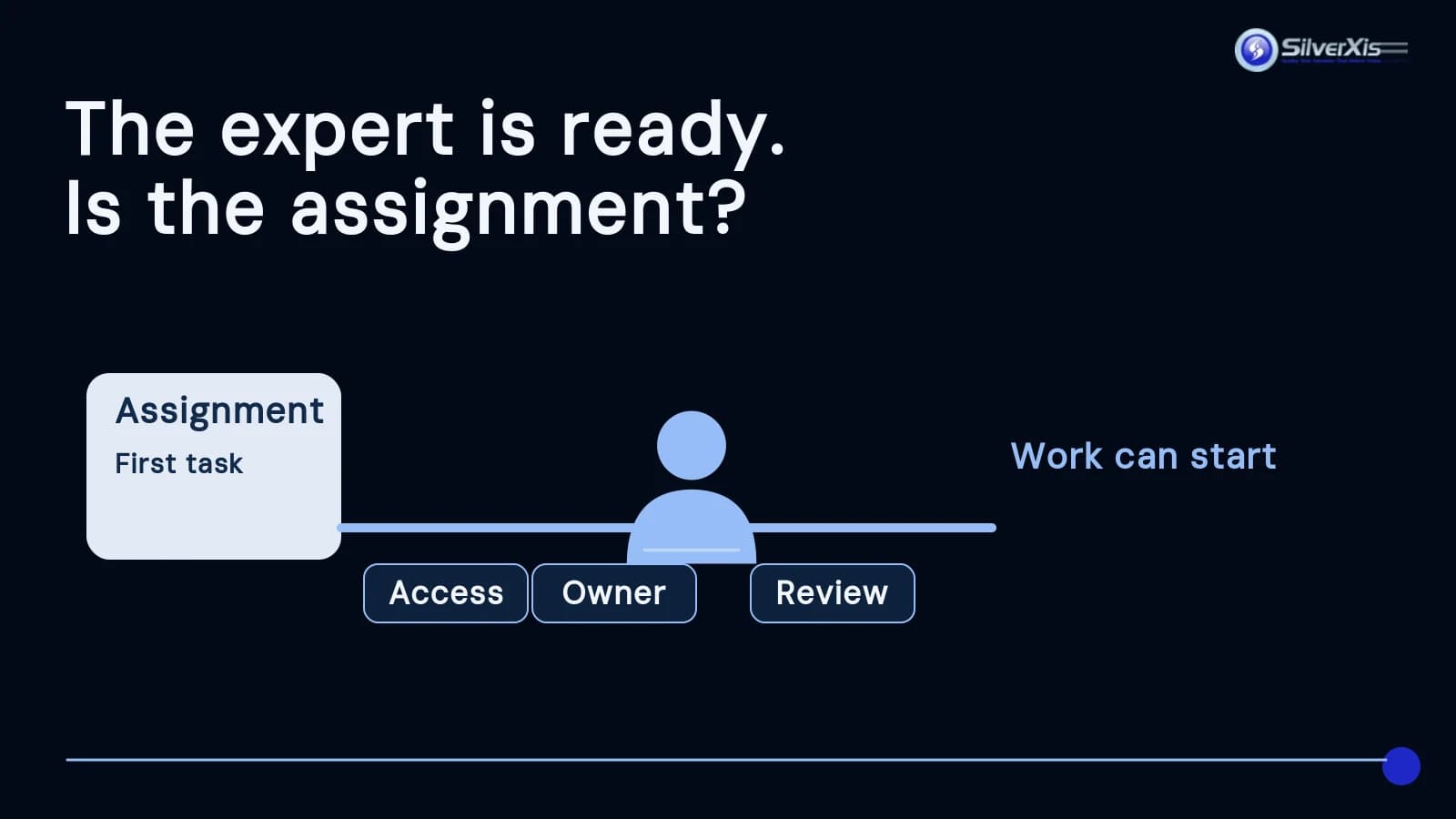
The handoff is the test. Decide what must be recorded before a task changes hands. Agree on the daily overlap window, the reviewer for completed work and the route for a blocker that cannot wait. Thoughtworks’ case is a reminder that distributed delivery becomes harder when team boundaries multiply without a shared decision path.
The blended-team check: Can a developer ending a shift name the next owner and the decision needed without arranging another meeting?
A sensible next move
Write a one-page brief before requesting proposals. Describe the work, the hours it needs live discussion, the person accountable for decisions and any restrictions on location or access. Ask each provider to propose the delivery model it believes fits and explain the tradeoffs. Compare rates only after those assumptions are visible.
If you are still deciding how to assess an individual specialist, my earlier post covers that different decision.
If you want a provider to own the whole software build rather than add engineers to your team, review the custom software option before selecting a staffing model.
For help choosing the right delivery model, start with SilverXis IT Staff Augmentation Services and choose Build My Team. Share the work, the overlap it needs and any compliance limits so the recommendation fits the assignment.
What is the difference between onshore, nearshore and offshore IT staffing?
Onshore means specialists working in U.S. time zones, usually providing the broadest live overlap and more options for in-person work. Nearshore means nearby time zones that allow regular shared hours. Offshore means a more distant delivery location, which can support sustained development when handoffs and oversight are deliberately organized.
Is offshore staffing always cheaper?
An offshore hourly rate may be lower, but the complete cost depends on the assignment. Compare the time spent waiting for decisions, management effort, rework and the ability to meet security obligations. A lower rate can still be the right choice for sustained work with a dependable handoff and available leadership.
What should I ask a technical staffing partner before signing?
Ask which locations the partner actually staffs, when people will overlap with your team and who will respond during U.S. business hours. Confirm vetting, contracting, payroll, replacement arrangements and expected lead times for specialized roles. Ask the partner to explain which delivery model it would reject for your assignment and why.
About the Author
Steve Flad Staffing and Fulfillment Manager
Steve Flad is Staffing and Fulfillment Manager at SilverXis, working with technical candidates, software consultants and hiring teams. His recruiting perspective connects project requirements with relevant experience, candidate fit and placement readiness. He focuses on the practical details that help both sides understand an assignment, including responsibilities, collaboration, expectations and onboarding.
No commitment required · Response within 24 hours · Free discovery call
We use cookies to understand how our site is used. Necessary cookies keep the site working. With your permission, we’d also use analytics cookies to improve it. You can change your mind anytime in Cookie settings. Cookie Policy